


Your cart's a bit thirsty.
Let’s fill it up.
In the last 2 years alone, Australian's have lost almost a billion dollars to scams and annual losses have tripled since 2020.
Scammers know we all sign up for marketing emails or text messages and search for good deals and discounts on products, and they will copy real companies.
Scams work because they catch us off-guard with messages or websites that look like the real thing. In an average day, we interact with lots of email, social media posts, ads and websites. It's not possible to examine each single one in detail. However, there are a few clues that can help you know when to take a closer look at a message or ad to check if it's a scam before you click on the link:
Below you can read about different types of scams, with examples of the types of warning signs to help you know when to take a closer look.
Liquorland uses emails, text messages and social media to contact our customers with relevant information, and only in the ways that you have given us permission to. It's good practice to be take a closer look at any type message that contains a link and check it is real.
This type of scam offers a reward for completing a survey. At the completion, the survey will ask for your financial details, so they are able to 'make the payment'. In reality, the scammer is stealing those details for their own use.
Liquorland will only contact you in the ways that you have agreed to when joining, and will only contact you with your consent via email and SMS.
Phone calls requesting, or asking you to verify, your personal information (such as your driver’s license or other type of identity information) or financial information, like your credit card or bank details. Liquorland will never call you and ask for this information.
Phone calls where the caller requires you to purchase gift cards. This could be to pay a fine, settle an outstanding debt. No legitimate companies or government agencies request, or allow payment using gift cards.
Tell the caller you will call them back. Hang up and look up the phone number on the official website.
Scammers use ads or posts to entice potential customers with amazing discounts or deals. Only trust posts from @LiquorlandAu on Instagram, @LiquorlandAu on Facebook and @Liquorland on X/Twitter. Liquorland's official social media accounts. All communication from our Liquorland social media accounts carry a blue verified tick next to the account name.
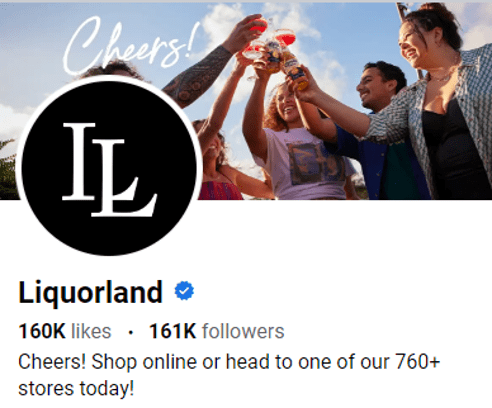
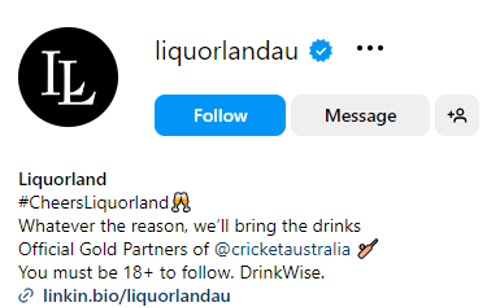
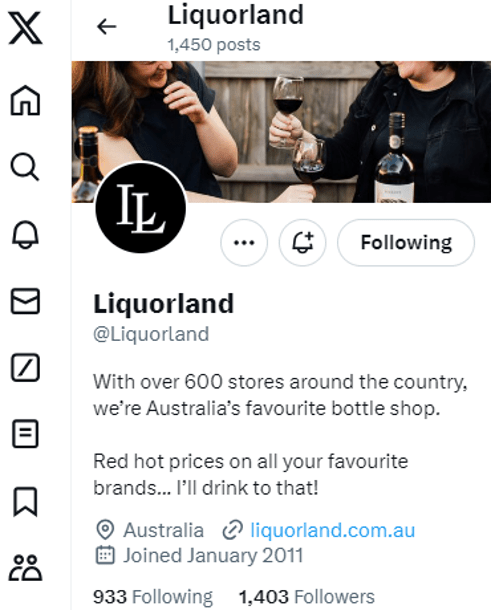
Scammers will create fake websites with discounted offers. These are designed to capture credit card details and personal information for the scammer to use for their own purchases, or to sell online. While these websites are designed to look real, the address will be different to the official site.
E.g. liquorlandau.outlet-au.co
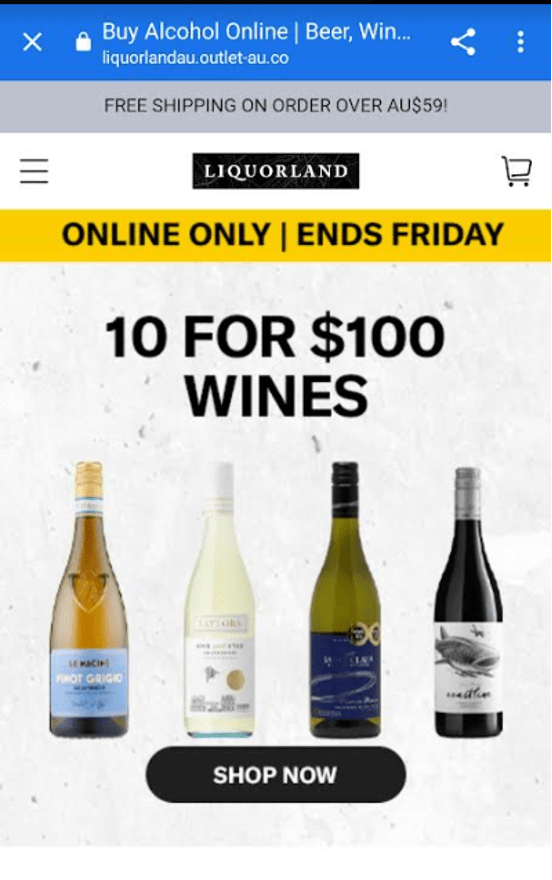
Only purchase Liquorland products from the website.
If you are concerned about a message you've received, an ad, website or social media account you've seen, please contact Liquorland Customer care for us to investigate.
By informing Liquorland you are helping to protect others. You can help stamp out online scams and fraudulent activity by reporting these to the Australian Taxation Office on 1300 795 995 or Scamwatch via their website.
At Coles Liquor, we understand the importance of being digitally secure. The responsible disclosure of vulnerabilities in our systems helps ensure the security and privacy of Coles and our customers. If you believe you have found a security vulnerability, please report it via submission form.
We do not condone malicious or illegal behaviour in identifying and reporting security vulnerabilities.
For more information, including the terms of the disclosure program visit the Bugcrowd website.
The ACCC is Australia's competition regulator and national consumer law champion.
Australia Cyber Security Centre (ACSC) The Australian Cyber Security Centre, the successor to the Cyber SecurityProtect yourself against scams, phishing attacks and fraud.
e-Safety CommissionereSafety can help Australians experiencing online bullying or abuse to take action or make a complaint.
ID CareIDCARE is Australia and New Zealand's national identity & cyber support service.
ScamwatchScamwatch is a website run by the Australian Competition and Consumer Commission (ACCC), and provides information to consumers and small businesses about how to recognise, avoid and report scams.